Es importante que cuide bien el dispositivo de acceso venoso central. Si no lo hace, puede infectarse. Y ya no podría usarlo. Habrá que quitar el tubo (catéter) y colocar uno nuevo en otra vena. Su enfermera le enseñará a cuidar de su acceso para prolongar su duración.
Siga estos consejos
-
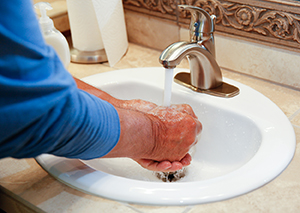
Lávese las manos a menudo con agua potable y jabón.
-
Trate de no tocar el catéter. Cualquiera que deba tocarlo debe lavarse las manos y usar guantes descartables nuevos.
-
No permita que nada (por ejemplo, la ropa) roce o tire del catéter.
-
Evite mojar el catéter. Pídale sugerencias para ducharse o bañarse al equipo de atención médica.
Esté pendiente de posibles problemas
Llame a su proveedor de atención médica de inmediato si tiene alguno de estos problemas:
-
Nota una rotura en los tubos.
-
La piel alrededor de su acceso sangra, supura o se torna roja o sensible.
-
Tiene fiebre de 100.4 °F (38 °C) o superior, o según lo que le haya indicado el proveedor de atención médica.
-
Los puntos (suturas) o el vendaje que cubre el catéter se aflojan o el catéter se sale.
-
Tiene un brazo inflamado o doloroso.
Nota
Generalmente un acceso por vena central se utiliza solo por un tiempo breve. Cuide muy bien de su acceso.
Proveedor de atención médica: enfermero
Nombre _______________________________ Teléfono _______________________________
Nombre _______________________________ Teléfono _______________________________
Featured in

Find a cardiac specialist
Because every beat matters, our cardiac doctors are dedicated to providing care like no other can.
Related Articles
Discharge Instructions: Caring for Your Central Line
You are going home with a central line. This is a tube put in a vein that leads to your heart. It provides medicine during your treatment. Because a central line has a high infection risk, you must take extra care. This sheet will help you remember what to do at home.
Discharge Instructions: Changing the Dressing on Your Central Line
Since a central line provides a direct path into your bloodstream, there is a high risk of infection when you change the dressing. Follow these step-by-step instructions to do this safely.
Central Line Infections
Learn about central line infections, how hospitals are trying to prevent them, and how to treat an infection if one occurs.
Discharge Instructions: Flushing Your Central Line
You are going home with a central line in place. This line carries medicine, fluids, or nutrition into your body. To keep the line clean and working well, it must be flushed regularly. Here's what you need to know.